In running groups, "breaking 3" is definitely a frequently mentioned term, because it's a threshold—non-professional runners who break three hours are considered serious runners. So the sub-3 marathon has always been my goal! Writing this reminds me of a psychological term, "non-defensive identification": ever since I met Leo, he also made breaking 3 his goal, constantly working toward it. After two years of preparation and two months of sprinting, Leo finally made his dream come true, smashing his PB from 3:06 to 2:52—like a miracle!
The way he combined physical and mental effort during his preparation is particularly worth learning for runners with sub-3 dreams: the effect of losing 5 kg in one month truly amazed me! Carefully reviewing the process from setting the sub-3 goal in September to exceeding expectations at the Shanghai Marathon, I sincerely admire his self-discipline, determination, and research spirit in constantly finding ways to achieve his goals—weight loss, quitting alcohol, making training plans, supplementing sports nutrition, and completing plans without compromise (running + strength training). No matter how busy work got or how many social engagements there were, he never made excuses to slack off or overindulge! He is absolutely a model of a serious runner. So I encouraged him to share his sub-3 experience, so that those of us chasing the sub-3 dream can find good methods and be inspired by his spirit.
The exhilarating moment of breaking 3 at the Shanghai Marathon passed quickly. Riding a wave of vanity, I immediately ran the Thailand Chiang Mai Inthanon by UTMB trail race and the Hangzhou Marathon. I've always felt that marathon running is a personal thing—only the runner knows what it's like, no need to show off. I didn't really want to write anything, but Shi said that my entire sub-3 process and results at the Shanghai Marathon were quite distinctive and should be helpful to other runners, so she encouraged me to write and share with everyone.
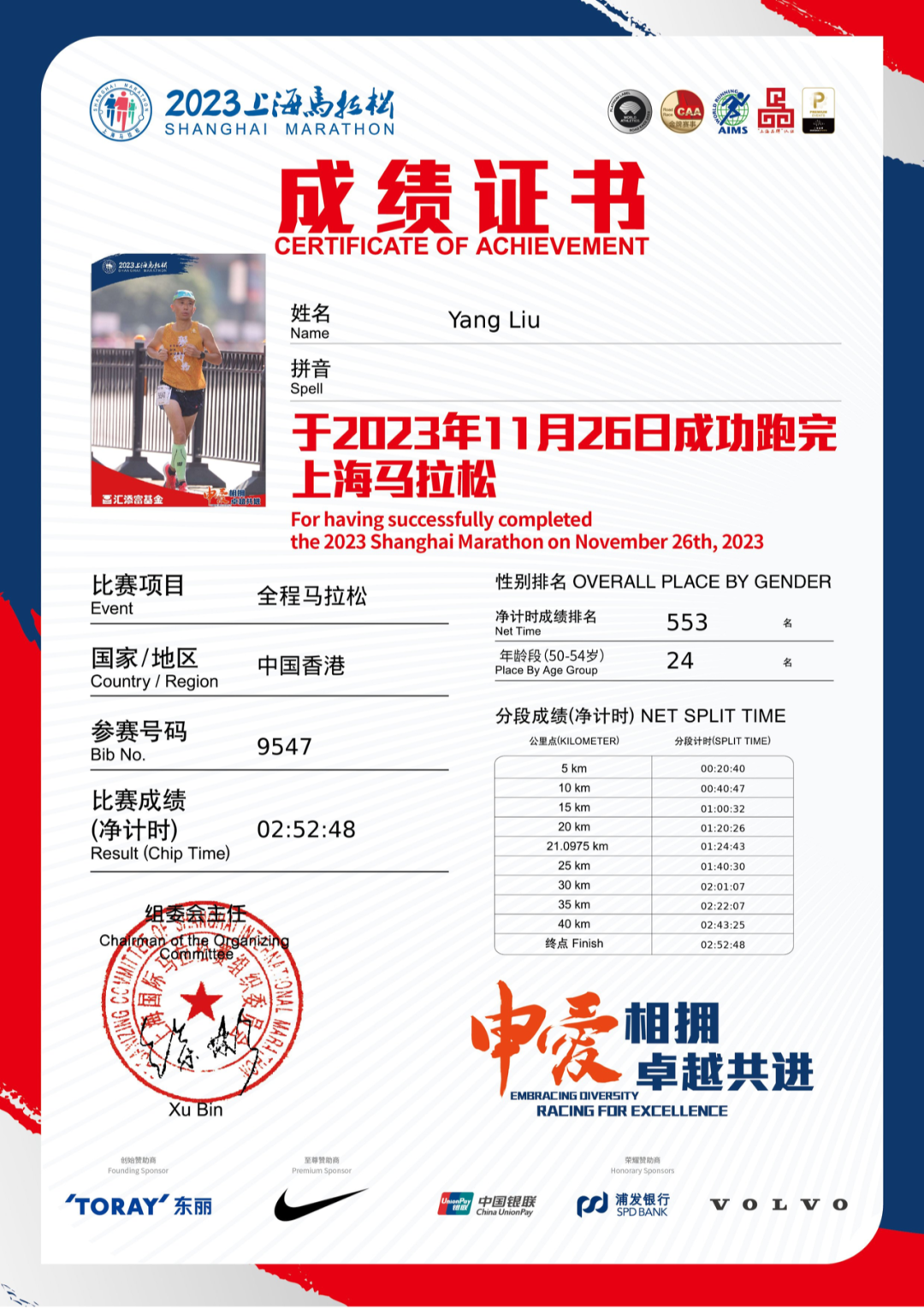
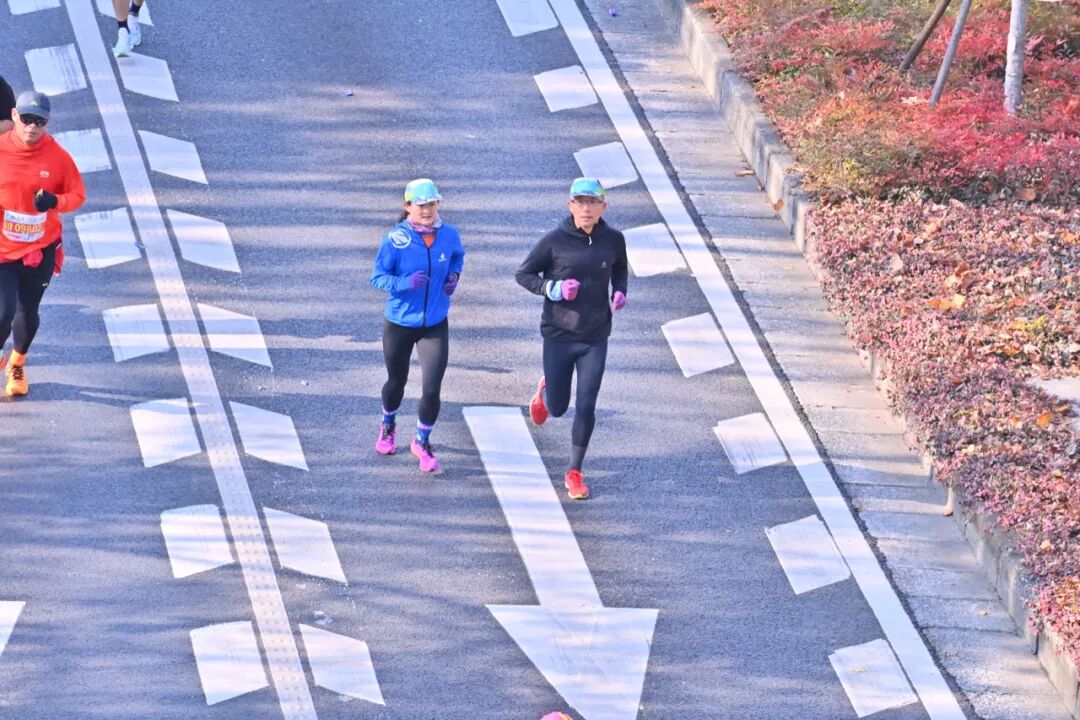
First of all, thanks and gratitude. Thanks for meeting a group of runners around me—it was their infectious atmosphere that made me determined to break 3. I especially love and enjoy the atmosphere of mutual appreciation, mutual achievement, and shared glory with these runners!
Thanks to the brothers and sisters of the 9A Club—Brother Ping, Hangbing, Yangyang, Xiaobin, Xiaohua, and Thermos—for their encouragement, guidance, and systematic knowledge sharing. Thanks to the CEIBS Tower Class for providing the 9A team with the opportunity to compete in the Shanghai Marathon, allowing me to represent 9A and quickly achieve the sub-3 goal. Thanks to 9A President Qian and Yan, President of the Ningbo Alumni Association of Shanghai Jiao Tong University Antai College, for their expectations and enthusiastic cheers on the Shanghai Marathon course. Thanks to the group of HKUST alumni persistently running toward the "Hundred Marathon Prince" goal. Thanks for meeting a group of Antai Sub-230 to Sub-240 elite runners—whether it's Master Shao and Brother Hai from Ningbo, or Blue from Suzhou, and Brother Dan from Shanghai—they made me truly feel what level business school amateur runners can reach through serious scientific training, making breaking 3 seem like a piece of cake.
Of course, the biggest thanks go to Shi—it was she who ran long and fast with me, gave me psychological coaching and physical recovery, and shared various road running and trail running experiences. A champion girlfriend who is also a psychological counselor is the key factor in realizing the sub-3 dream!
1. My Running Background
Without talking about my physical condition and training level, just talking about how hard and awesome I worked to break 3 would lack objectivity, representativeness, and universality.
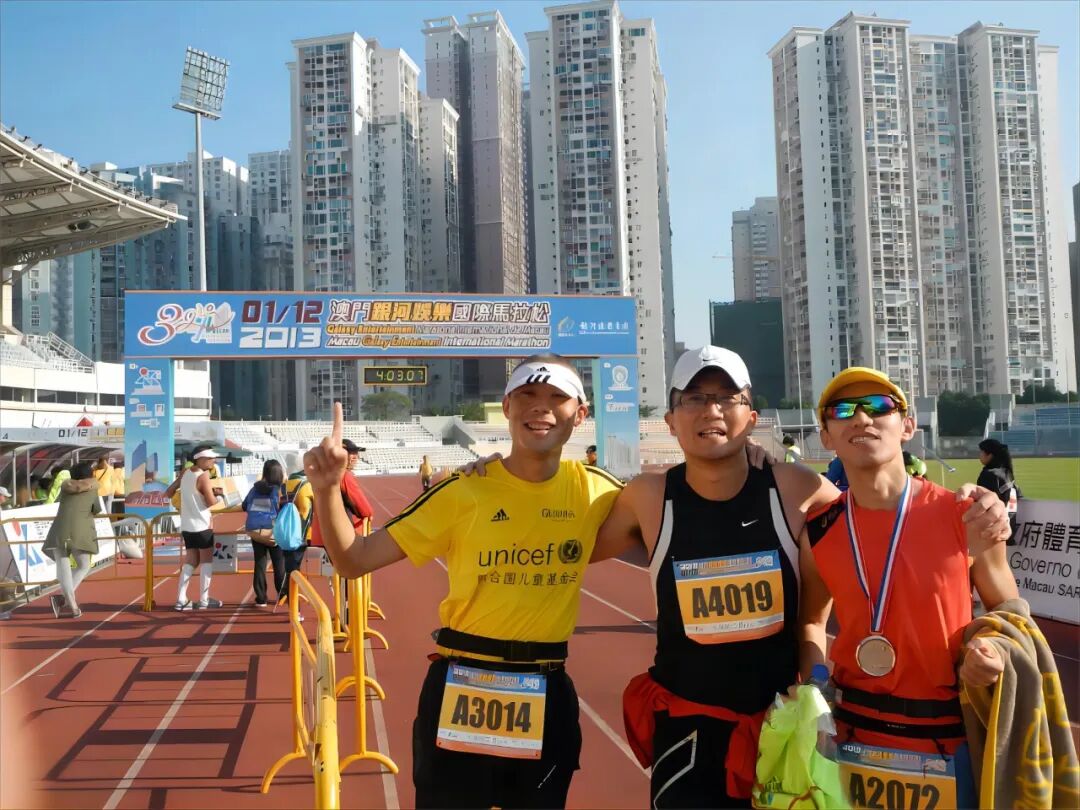
My first ten years of running: I started running marathons because of the Gobi Challenge. My first half marathon was the 2012 Hong Kong Marathon, and my first full marathon was the 2013 Macau Marathon, finishing in 4:02. After that, my times hovered between 3:45 and 4:30. I also ran the Hong Kong 100 Small Bronze, which wasn't too shabby, but I didn't have big ambitions—just maintained a mentality of running to see the world, running marathons everywhere to enjoy the scenery. Until 2018-19, when marathon registrations started requiring lotteries and I never got picked, I got serious about running a qualifying time to bypass the lottery. In one all-out effort, I only broke 3:30.
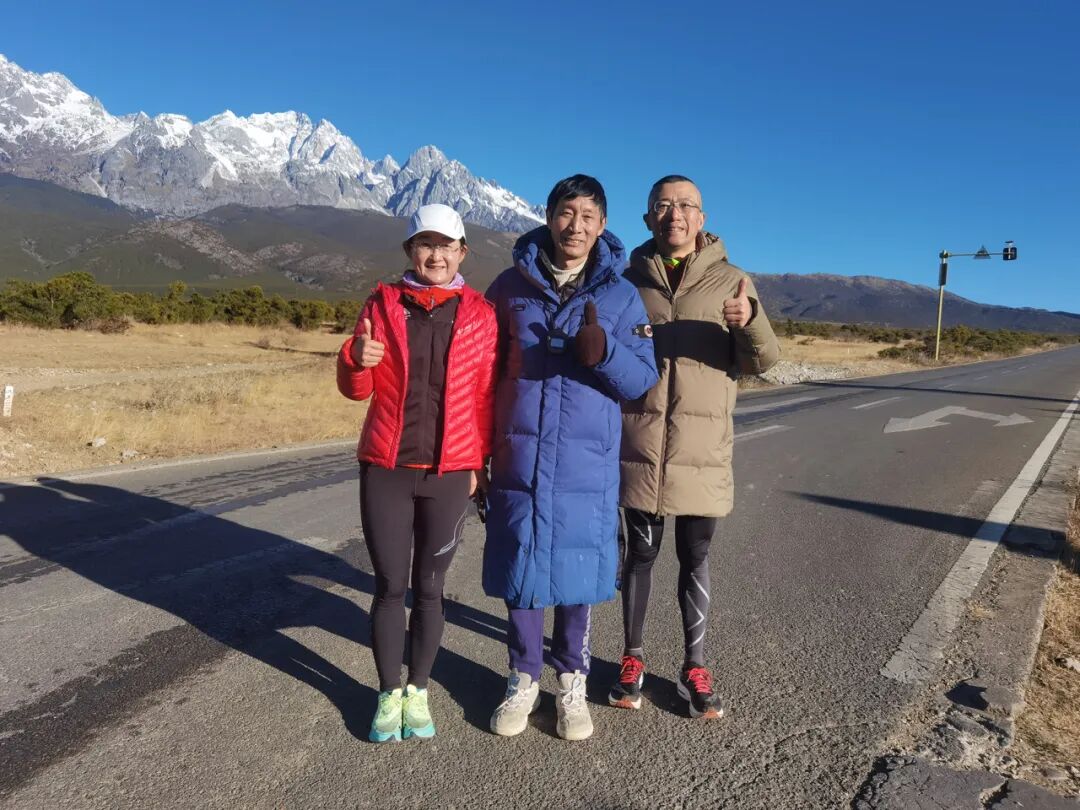
My recent two years: I met Shi. Because of escaping lockdown, I spent most of my free time running mountains, lakes, and riverbanks in Ningbo. My mileage increased significantly, and my muscles got trained. During the 2022 Spring Festival, Shi took me to Lijiang for altitude training. I followed Coach Li Guoqiang of the national women's marathon team and his athletes, training from dawn to dusk for a month, starting a professional team training mode of sleep—run—eat—sleep—run—eat, twice a day, with monthly training volume exceeding 500K. (Coach Li's training mode and methods had a huge impact on me; you can watch his videos online for the key points and essence.)
I originally planned to break 3 right after coming down from altitude training, but unfortunately all races were canceled. I could only run trail races. At the Moganshan 50K trail race, I finished third in the business school group—my first time on the podium. I also discovered my potential, which strengthened my confidence in breaking 3.
In summary, looking back, you can see that my running in the past two years has qualitatively changed compared to the previous ten years. This is the major prerequisite and foundation for my sub-3. Therefore, ordinary runners may need to accumulate a certain running level before attempting to break 3.
2. Executing the Training Plan
My desire to break 3 was based on a very simple concept: a normal, healthy ordinary person can break 3 through scientific training, without requiring talent. I just wanted to prove this. Of course, this has already been proven by the thousands (not yet tens of thousands) of runners who broke 3 this year.
Many running friends ask what training plan I used and how much monthly mileage I ran.
I just used a very ordinary training plan from the internet and trained alone. (This training plan was often questioned online—can a plan with lots of 5:20-5:40 pace workouts really break 3?) I've always felt that marathon training plans are largely similar, revolving around interval runs, progressive runs, tempo runs, and LSD every week. The key, the key, is execution! Understanding the essence of marathon training, the rest is 100% execution! This also answers the second question above: mileage isn't the key—the key is not to waste time on junk miles! (Training and exercise are two different things.)
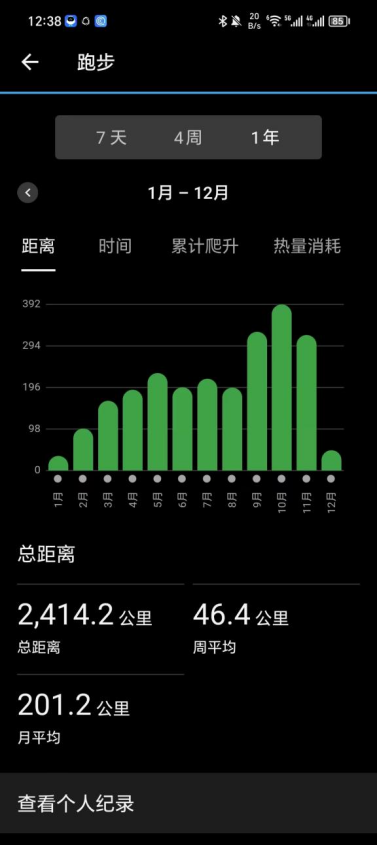
Amateur runners are different from professional athletes—training time is spare time, so you must use your time well and fully. Due to work, I occasionally need to travel to other cities. I always find a park or lake near my hotel to complete that day's workout, then return to the hotel gym for strength training. During this year's National Day holiday, I basically trained twice a day. On October 8, when the holiday ended and it was time to work, but it happened to be Sunday's LSD 33K training session, I went out alone after work and spent 3 hours completing this training plan. When work made morning or evening training impossible, I squeezed in lunch time to run an easy run by the river.
In short, 100% completing the pace and distance requirements of the training plan, especially ensuring long-distance aerobic runs, is the key to avoiding slowing down after 30 km.
They say that races reflect training level, and I deeply experienced this in breaking 3. A few weeks before the Shanghai Marathon, Brother Ping and Yangyang strongly encouraged me to test myself at the Dayu Half Marathon and Jinan Full Marathon. The results basically met the stage requirements of the training plan. Therefore, in the following weeks, I followed the training plan even more closely. I had no psychological burden before the Shanghai Marathon, and I slept very well the night before the race. Because I knew that the final result of the race was basically determined in the previous three months of training. I just needed to run normally—nothing to worry or be anxious about. And indeed it was. So training level determines race outcome—enough talk, just train!
Another important dimension is that you absolutely must strengthen core strength training. You can't just run mindlessly. Only with enhanced core strength can you straighten up and open up your stride during running. Depending on the situation, after low-intensity training each week, I do 10 kg barbell plate forward lunges with presses and weighted Russian twists. Doing these a few times every week has a tremendous effect on improving running performance!
3. Diet Control and Weight Loss
To break 3, you must lose weight—this is also the most critical point. My weight loss method is very simple, with no fancy tricks, and no drugs. My normal weight is 70-71 kg. For the sub-3 goal, I set my target weight at 65-66 kg. I started losing weight in September, mainly by switching lunch to healthy light meals—beef/chicken breast + vegetable salad. Breakfast was normal, and dinner basically had no carbs. Normally I don't drink sugary beverages or eat snacks, and I basically don't drink alcohol. At first, weight loss was a bit slow, and I was a bit worried it wouldn't come down. After training volume increased from late September, weight dropped straight down, finally reaching the set goal. This laid the most critical physical foundation for a pain-free sub-3.
Many running friends complain that their running speed has been stuck in a slower range. In fact, it's because weight and speed have reached a balance. Once you lose 5 kg and feel as light as a swallow, your speed will naturally shoot up.
4. Proper Nutrition Supplementation
Proper nutrition supplementation is crucial for marathon training, which is also a cognitive improvement from running in the past two years. Proper supplementation mainly falls into two aspects:
Long-term nutritional supplements: As age increases, you must increase intake of various vitamins and minerals. Middle-aged runners especially need to focus on protecting and promptly replenishing lost substances. I previously had no awareness of this at all. Only in the past two years was I educated to know that running requires supplementing various nutrients—mainly CoQ10 to protect the heart, iron to increase blood oxygen-carrying capacity, and glucosamine to protect joints. Before, we would buy these products separately, which was relatively troublesome and incomplete. Now I take Handlove's sports nutrition pack, one pack of four or five pills daily, solving all running needs at once—convenient, fast, and effective. Long-term supplementation has very significant effects on the body: improved running ability, faster fatigue recovery, and basically no joint pain issues.
Short-term energy gels: Throughout this sub-3 process, I also gained new understanding of energy gel usage. In previous training, I was always unable to complete training plans with guaranteed quality and quantity. Whether it was intervals or LSD, I would lose strength in the second half and couldn't continue at the required pace, which was always frustrating and made me doubt myself. This time, I started eating gels during training. During high-intensity interval runs and long-distance LSDs, I ate one or two gels in the middle. The effect of energy gels on me was immediate—about 5 minutes after eating, my legs were full of energy again. Whether intervals or LSD, I could immediately recover my first-half pace and persist to complete the plan. This greatly boosted my confidence in completing training plans, because every time I could complete training requirements with quality and quantity, it naturally strengthened my confidence in the race through positive feedback. Secondly, the application of race gel strategy: precisely because of the obvious effect of eating gels during training, I paid even more attention to how to eat gels during the race. I used 6 gels in breaking 3 at the Shanghai Marathon—one 10 minutes before the start, then one every 7.5 km at water stations. Of course, you should simulate and adapt gel timing in previous marathon practice races to find what works best for you. (For the principles and arrangements of gel consumption, see Huirun's article "Heartbreaking Crawl Before the Beijing Marathon Finish Line! Want to PB? Fueling is Key, Here's What You Need to Do.")
Finally, energy gels mainly contain 100 calories, used to quickly replenish blood and raise blood sugar levels. Besides paying attention to individual caffeine tolerance, you don't need to be too picky about brands.
5. Emphasizing Recovery and Adjustment
Recovery is an indispensable part of marathon training, also a very important component, and often overlooked by many running friends. "You must maintain the enthusiasm for the next day's training"—this is very important. Maintaining enthusiasm for the next day's training depends on two points: first, the previous day's training must not be excessive, leaving you exhausted and resistant to the next day's training while your muscle strength and speed can't meet training requirements; second, active recovery. Secondly, from a long-term perspective, three months of pre-race training is an accumulation process, with mileage reaching about 1000 km. This creates cumulative fatigue in the body, eventually causing various muscle or joint pains. Therefore, you must actively relax and recover after every training session to ensure daily continued training and avoid injuries. What we learned from the national team during Lijiang training was mutual leg massage and relaxation after training every day. At the same time, if conditions allow, going to a professional sports massage center once a week for professional rehabilitation therapists and equipment to perform massage and recovery is twice the result with half the effort. Recovery and relaxation and training plan execution are complementary, mutually reinforcing in a spiral upward system—good recovery enables good training, and no injuries enable continuous training and racing! Therefore, in this regard, the importance of recovery is self-evident, and cannot be overemphasized. It must be fully valued and treated during the training cycle.

6. Conclusion
I'm already over 50. This time, I completely persisted in executing the training plan alone, without team training. During the Shanghai Marathon race, I also ran alone, without following official or private pacers. Finishing was relatively easy, and I finally completed this sub-3 journey at the Shanghai Marathon pain-free and injury-free.
In summary, my training was relatively simple and plain—basically a plain-water-style lone wolf training, nothing special, no secret techniques. All training content and knowledge are repeatedly discussed online and in professional apps. I just through serious systematic learning of scientific training methods, executing training plans thoroughly, strengthening core strength training, losing weight, supplementing with sports nutrition, emphasizing recovery and adjustment, multiple dimensions linked together and interacting with each other. Most importantly, with the encouragement and support of a group of friends, breaking 3 became a natural outcome.
My sub-3 journey at the Shanghai Marathon is not only affirmation of my own efforts but also the best proof of scientific training. I hope my experience and sharing can inspire more people to love running, persist in scientific training, and achieve their sub-3 and PB dreams pain-free and injury-free!
Grateful again!
Yangliu, Christmas 2023