On March 26, at the Guilin Marathon, I finally achieved a sub-3-hour finish at a CAA-certified race.

It came a little late, but it finally came. On March 26, at the Guilin Marathon, I finally achieved a sub-3-hour finish at a CAA-certified race.
This moment had been a long time coming. For everyday recreational runners, breaking 3:30 is a major milestone, and breaking 3:00 is an even bigger one.
According to data from the Chinese Athletics Association, as of the end of 2019, there were only around 10,000 runners nationwide who had broken 3 hours in the marathon. Among them, fewer than 150 were from Guangxi, and only about 30 to 40 from Nanning. Having finally broken 3, I couldn't just let it pass without leaving something behind. Some thoughts, some lessons—worth recording, both for my own future reflection and for friends aiming to break 3, in the hope they might find a little help here.
2:58! An Unexpected Sub-3 on Back-to-Back Marathons
You never know whether tomorrow or an accident will come first. Last week's Guilin Marathon brought an "accident."
On March 19, I ran the Chongqing Marathon; on March 26, I headed to the Guilin Marathon. Because it was back-to-back, I gave myself a reasonable excuse: no goal, just run with a different mindset. From singlet to shorts to shoes, I changed everything. I wanted to shake off the heavy baggage, start fresh, and run light.
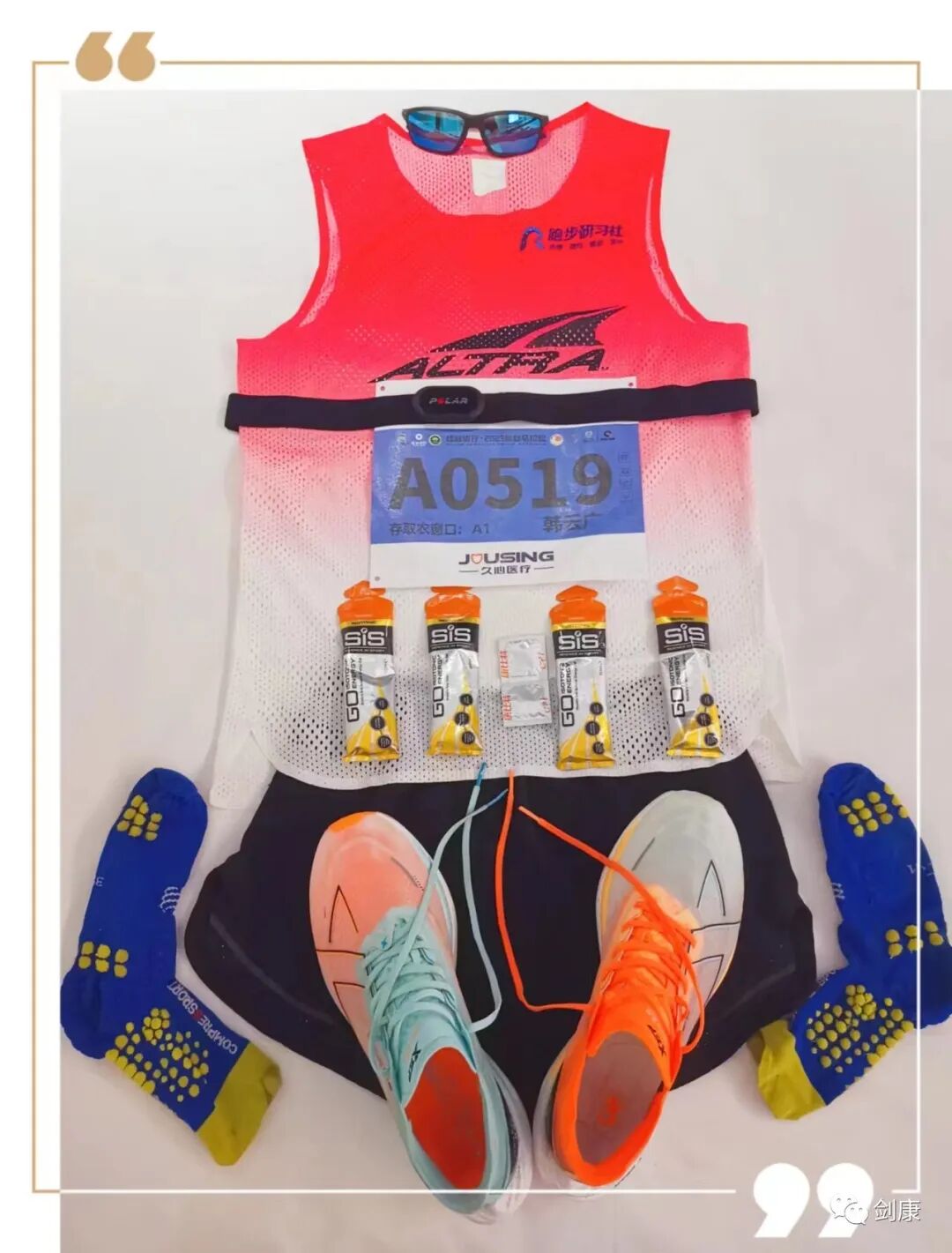
Change the gear, change the mood. My foot injury hadn't healed, the course was uneven, and it was back-to-back... I found too many excuses, treating it as a race-as-training session—just finish and be done.

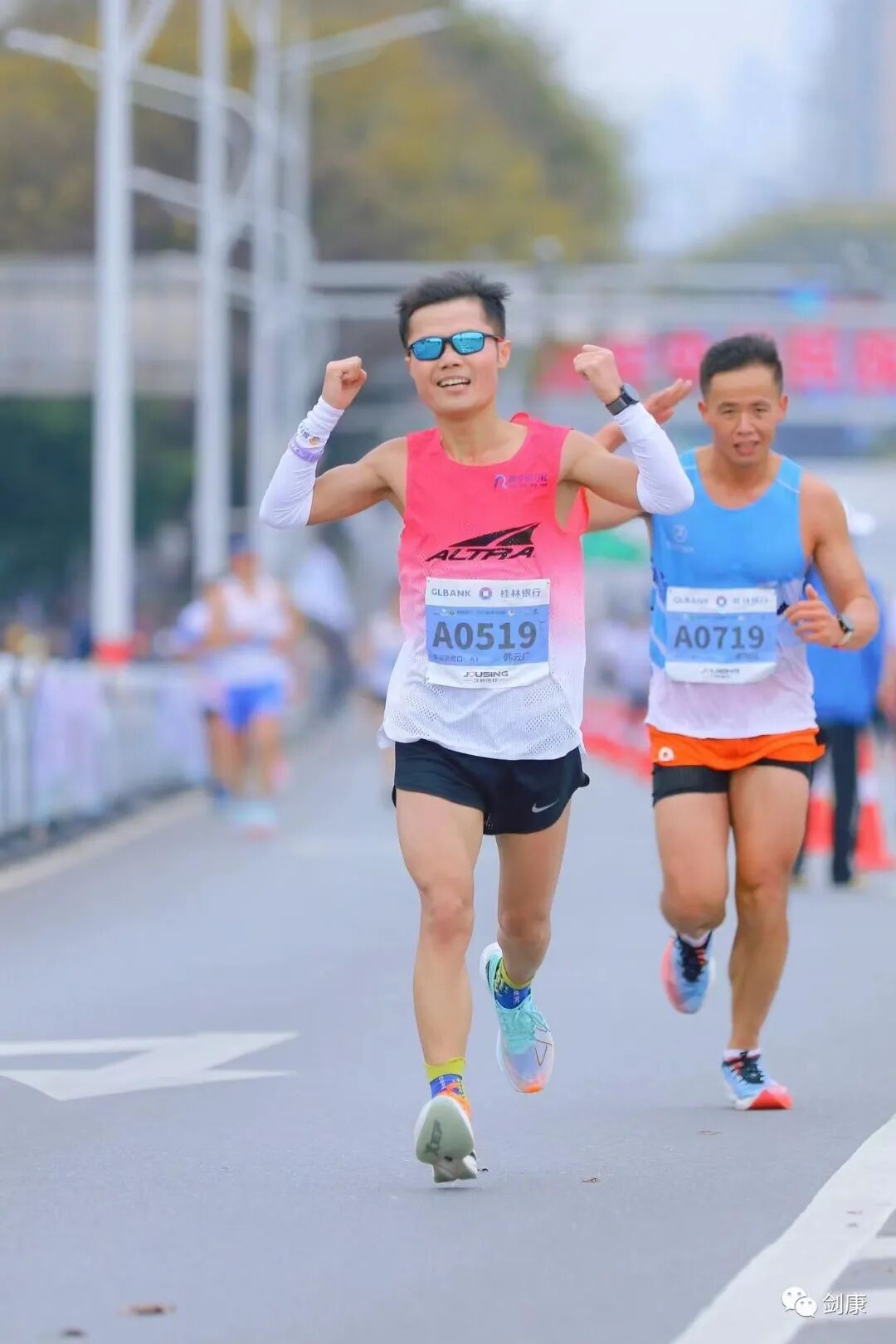
The final 500-meter sprint. Sometimes, life is just like that: you plant a willow without intention, and it grows into shade. Without setting a goal, I unexpectedly broke 3.

After breaking 3, I high-fived and shook hands with a stranger at the finish line. The moment I crossed, I raised both fists, cheering for myself, giving myself a thumbs-up. I couldn't help but actively high-five a fellow runner in celebration.
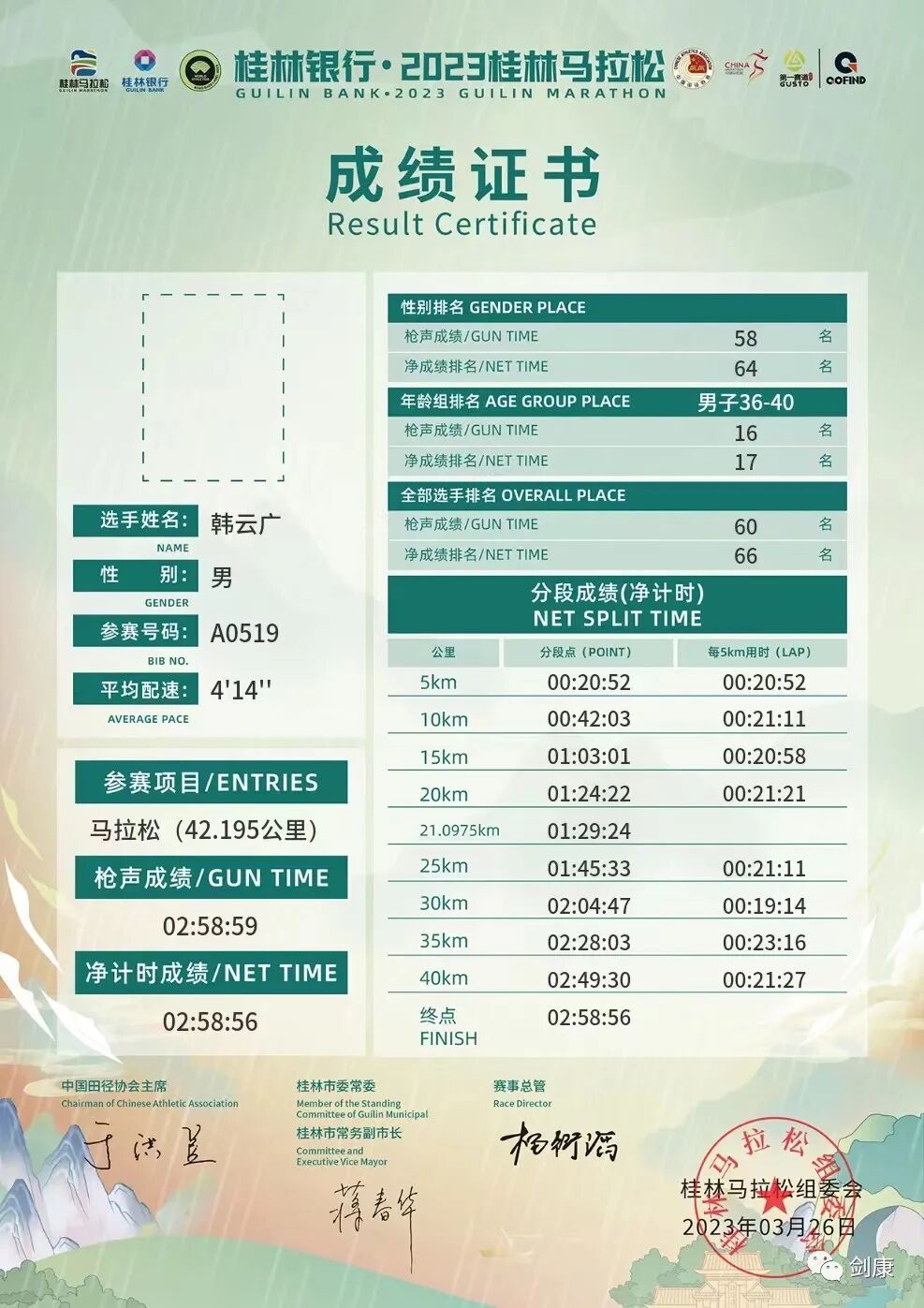
Guilin Marathon certificate (the 25–35 km split was inaccurately recorded). This is what relief feels like. This is "the body in hell, the soul in heaven." This is "souls alike will always meet." A thousand words condensed into five: Finally sub-3.
Even Pacing + Restraint—Absolutely Critical
Accidents are often not accidental. I know, there is no success without reason. Over the past few days, I've been reflecting: despite so many unfavorable factors, why was I still able to break 3? The most critical reasons boil down to just two:
First, even pacing
As shown below, my 5 km splits and pace at Guilin were incredibly smooth.
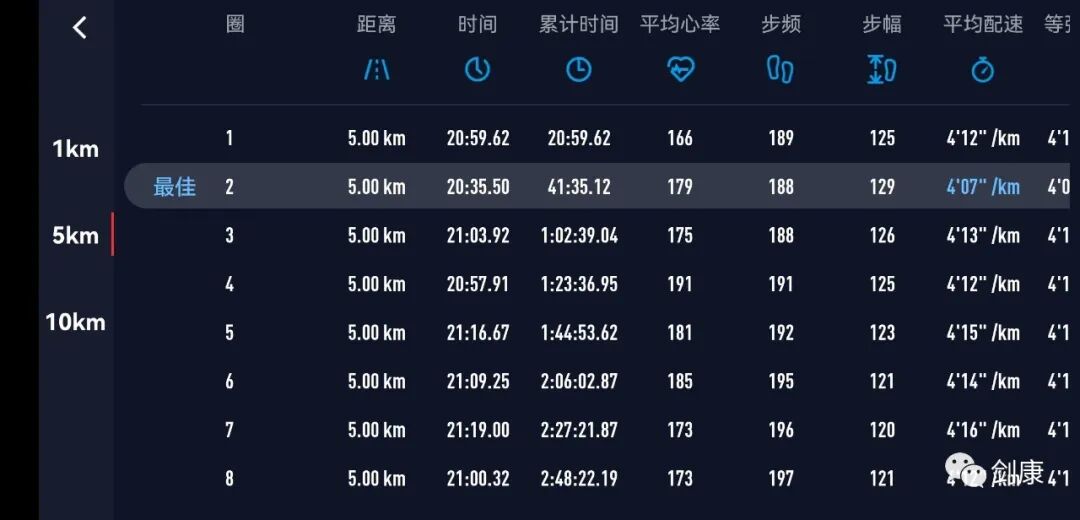
Guilin Marathon split times and average pace. Maintaining rhythm and cruising at a steady pace is absolutely critical.
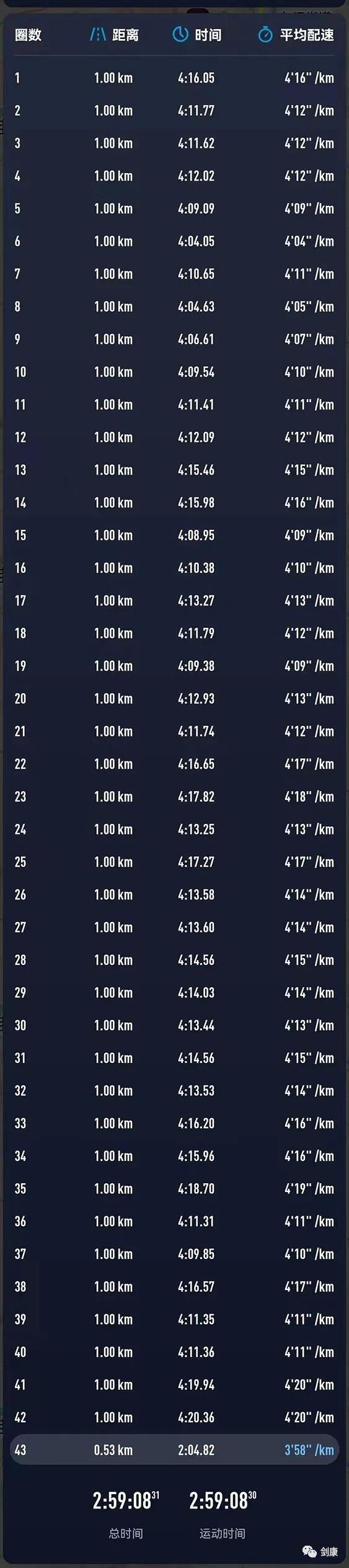
Per-kilometer pace chart (generally slightly slower uphill, slightly faster downhill). To maintain rhythm, I absolutely refused to enter aid stations in the first 10 km. Throughout the entire race, I only entered aid stations 3 times (whether to stop at every station varies from person to person). In previous failed attempts, without exception, the mistake was starting too fast and slowing down later, even starting fast and crashing, with no sense of rhythm whatsoever.
Second, restrain yourself.
Whether it was Xiamen last November or Chongqing on March 19 this year, in the first half I was too excited, too impulsive. Starting too fast led to a brutal crash later, especially after 30 km—without exception, they all fell apart. You really have to respect the marathon and deeply understand that a full marathon is not simply a half marathon times two.
A marathon is 42.195 km. Don't run 42.195 km at the fitness and pace you have for 30 km. Restraining your restless mind is essential. This time, I stuck with the sub-3 pack the whole way, constantly telling myself not to break away. It wasn't until 38 km, when most of the sub-3 pack had dropped off, that I moved up to lead and run solo.

For most of the race, I ran with the sub-3 pack. If I had to find more reasons, it would be that daily training must be disciplined, systematic, and rigorous (after the pandemic, my training was not systematic enough, and my mileage was on the lower side).
Another point: this time I started from Zone A. If I had also started from Zone A in Chongqing, I wouldn't have had to chase for 14 km to catch the 3:00 pacers, wasting too much energy and leaving me drained later. Of course, if you're strong enough, you can break 3 even from Zone D. For example, at this Guilin Marathon, the men's champion was a Black runner who started from Zone D.
Don't Fear Losing—I Failed 3 Times Before Succeeding
The marathon is a dojo for refining the mind and tempering the soul.
It taught me the true meaning of truths like "failure is the mother of success," "confidence is more precious than gold," and "those who dare to fight will win." Ever since that sub-3 test run at Nanhu in early November last year where I clocked 2:54, I had been thinking about breaking 3 in an official race, or even going further. The result? Failure after failure. On November 27 last year, the Xiamen Marathon, I finished in 3:06.
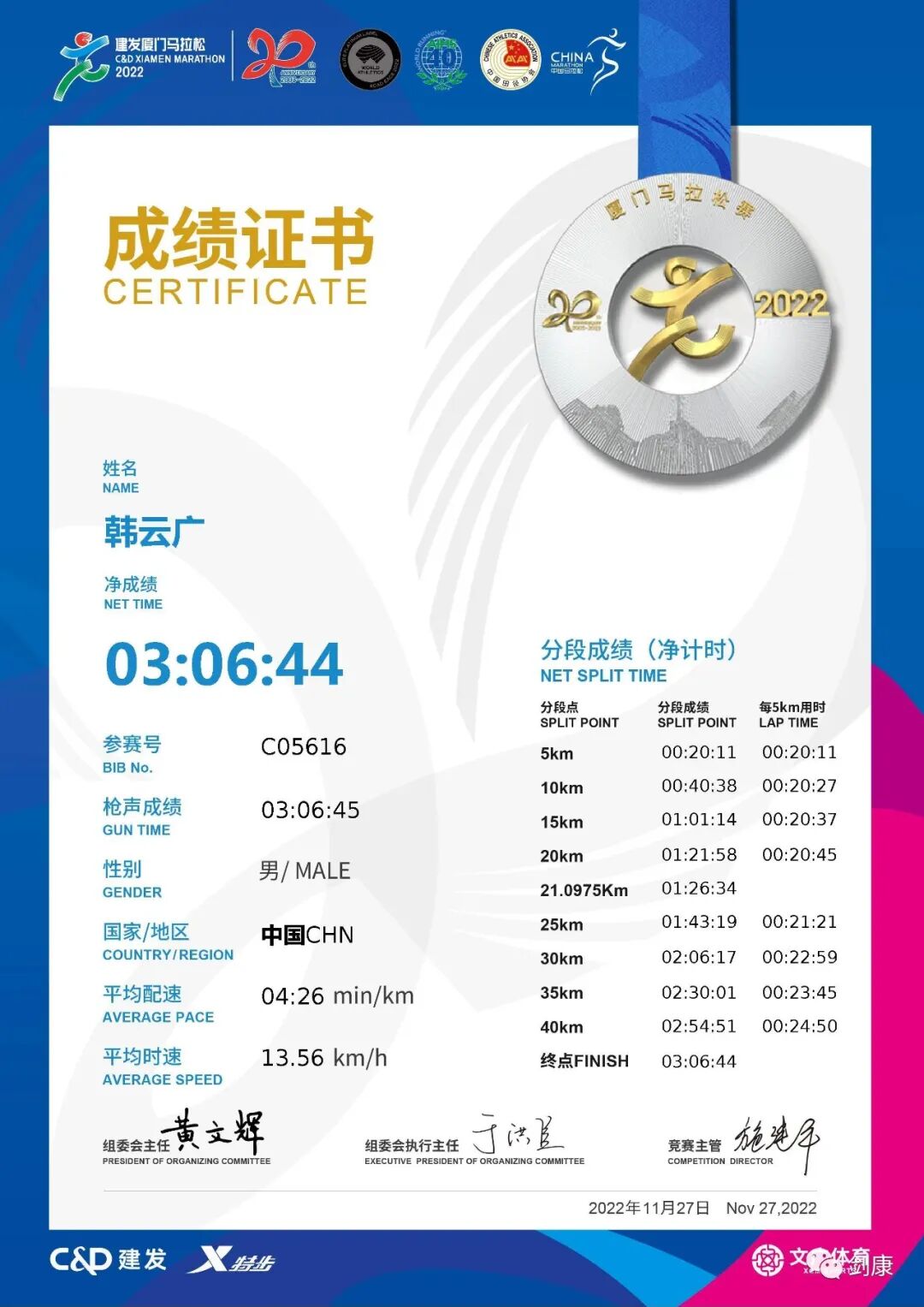
Xiamen Marathon certificate.

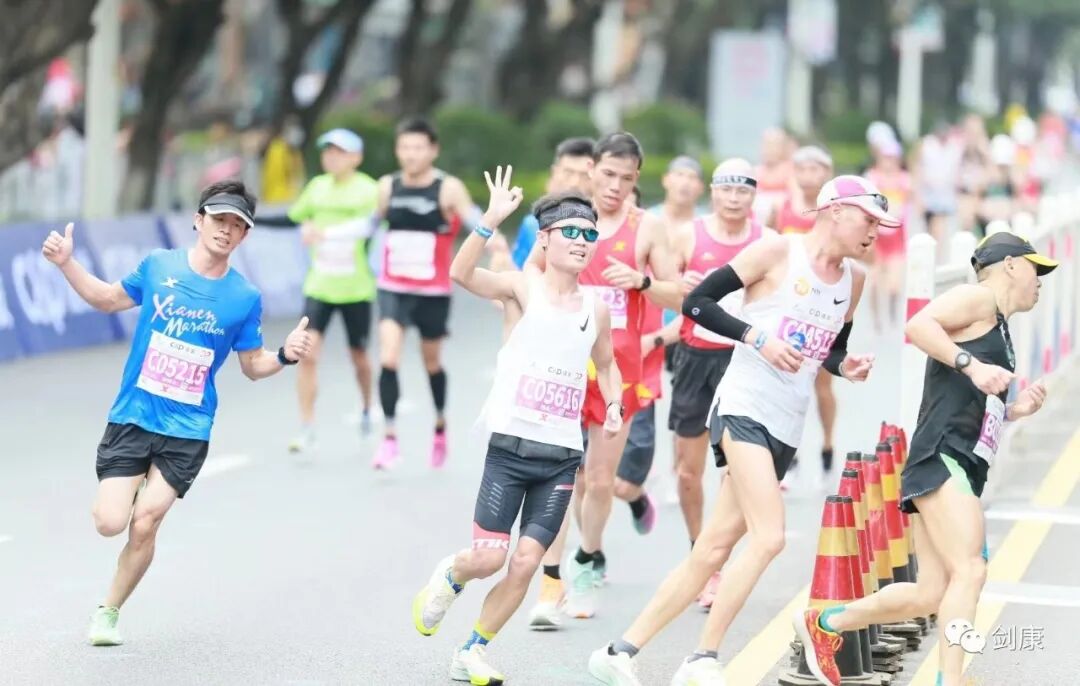
After Xiamen, on February 19 this year, the Shenzhen Marathon was even worse—a 3:17 finish (mainly because after recovering from COVID, I had barely trained systematically, with monthly mileage barely over 100 km, which was too low).

Shenzhen Marathon certificate. On March 19, the Chongqing Marathon, I finished in 3:02.

Chongqing Marathon certificate.
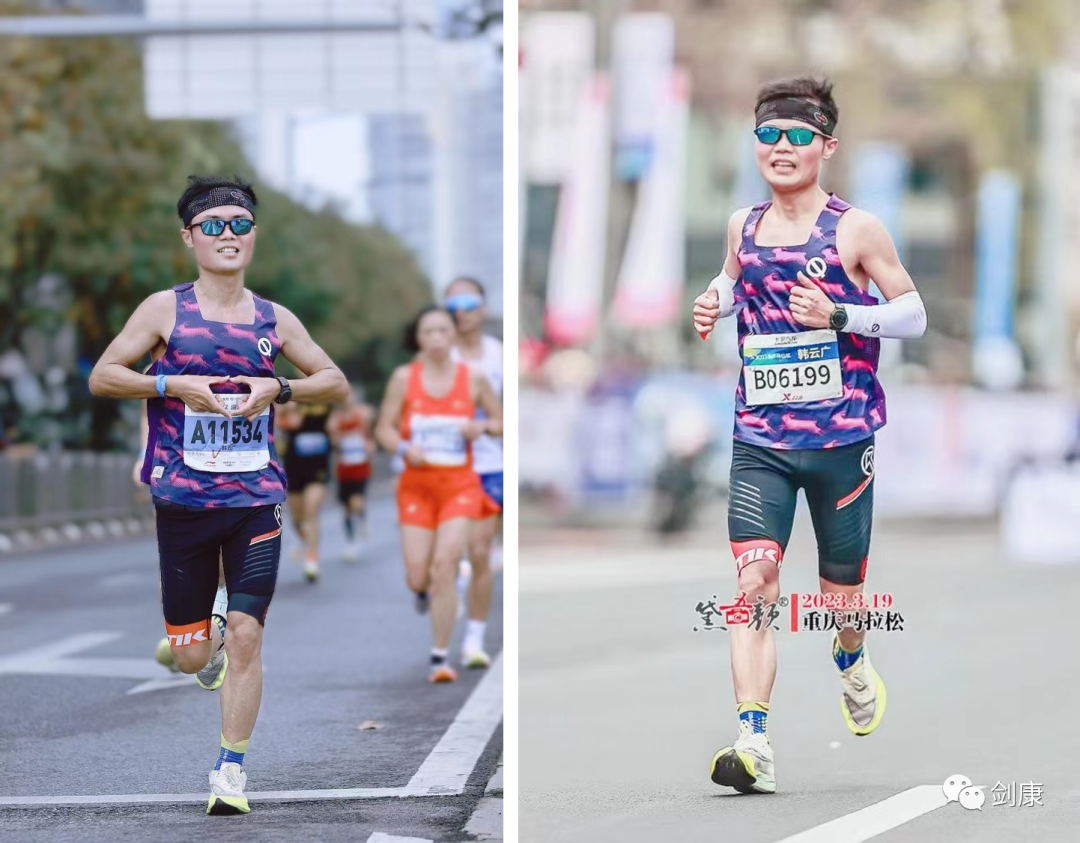
Failure isn't scary; being knocked down by failure is. I am someone who never admits defeat.
Before every race, I do my homework seriously. After every race, I reflect seriously. I firmly believe that even if I don't succeed this time, I will eventually succeed. To be honest, around the 37 km mark at this Guilin Marathon, I was tired, even a little ready to give up. It was 「Six Practices of Excellence」 that saved me. During that stretch, I recited 「Six Practices of Excellence」 several times. Especially the final practice: "Don't let emotions cloud your judgment"—"As long as you live, you will encounter difficulties and setbacks. Never let them crush you. Never run away. Face them head-on. Bear it with grit." As a result, by 40 km, my body suddenly felt lighter. In the final 500 meters, I even overtook a few people.
Running a marathon involves the legs, the brain, and the heart. Isn't life the same?
Set High Goals, But Not Unreachable Ones
This Guilin Marathon may seem accidental, but it was inevitable. Although I didn't set a higher explicit goal before the race, I was still aiming for sub-3. With a goal, results can approach it. Without a goal, good results are hard to come by. The marathon is like this; starting a business is like this; in fact, anything is like this. I can't imagine a year, a month, or a day without goals. What a waste of time that would be. To achieve something, you must set high goals, quantify them, and commit to daily practice.
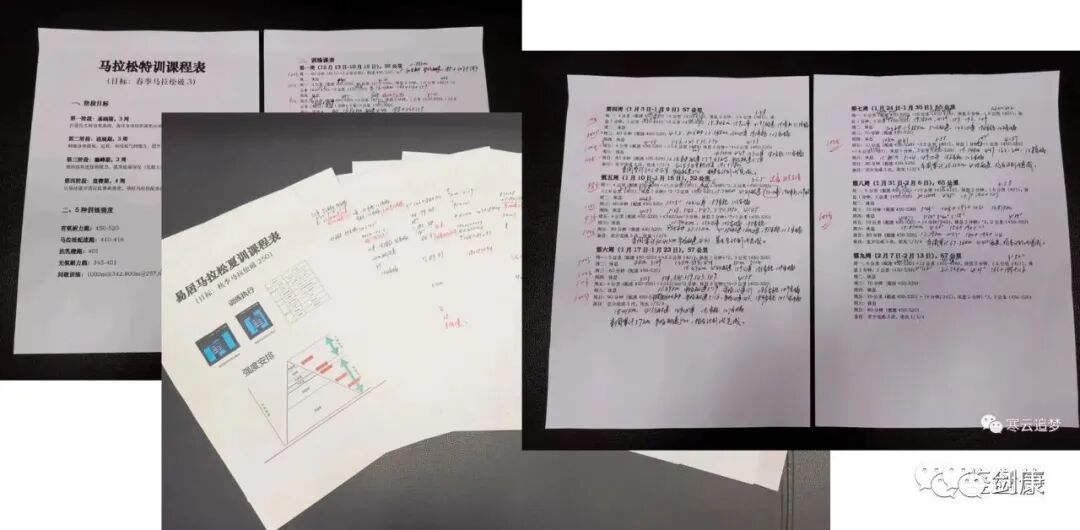
Daily practice, daily reflection, one step at a time. Don't laugh, but before each of the first three failed attempts, I made myself a detailed booklet half a month to a month before the race. Daily execution, daily review, daily reflection. It was precisely because of this that I went from a complete running novice, from a 4:36 marathon, slowly broke through 3:30, and now finally broke through 3:00.
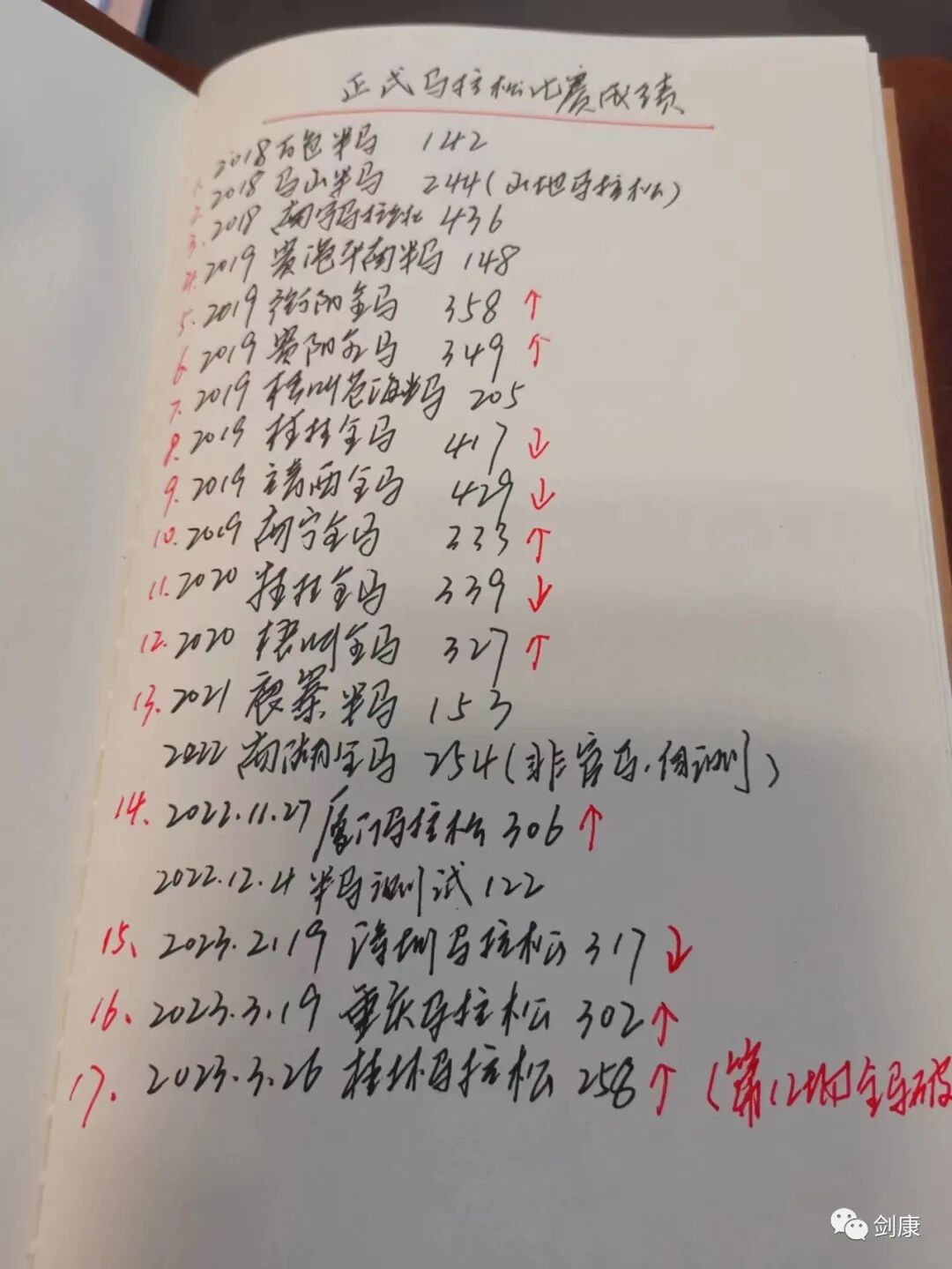
My marathon progression—driven by goals.

From running novice to elite amateur: set high goals, but don't overestimate yourself. Looking back now, I deeply feel the importance of reasonable goals. For example, at the Xiamen Marathon at the end of last November, my real goal wasn't actually sub-3, but 2:52.
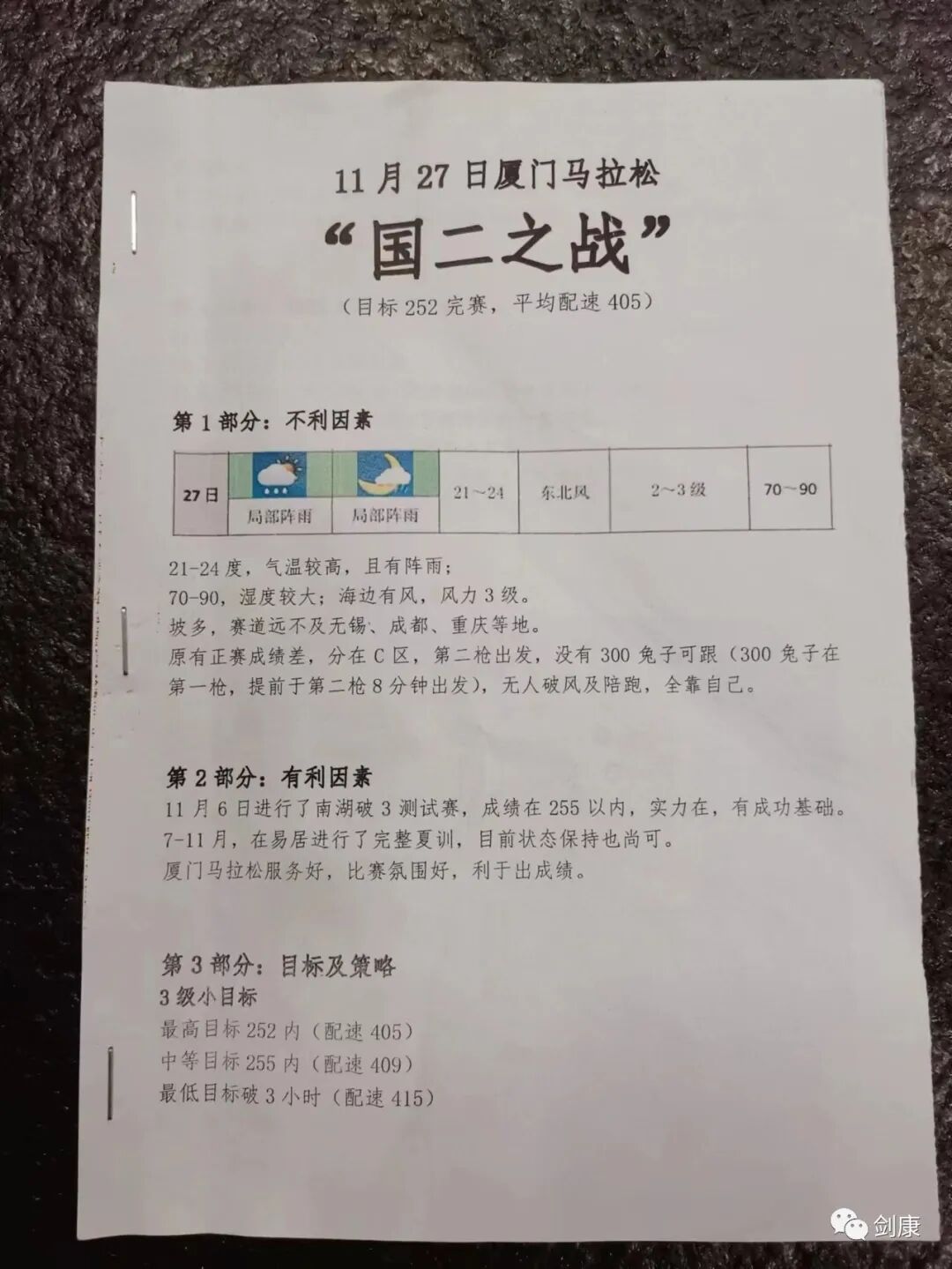
The Xiamen goal was 2:52—too confident. The first half was indeed on target. But later, a few bridges and big hills broke me.
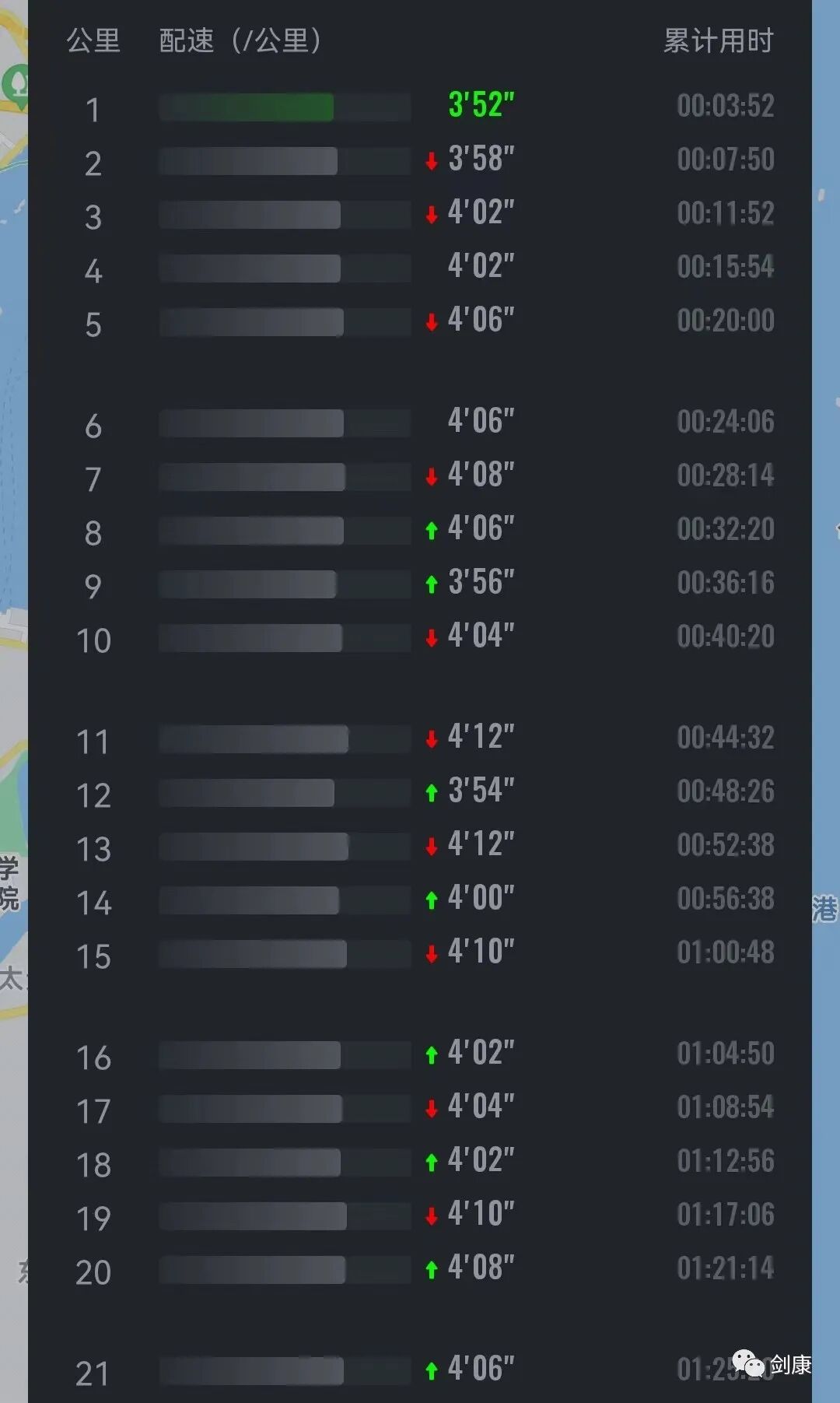
Xiamen first-half pace.
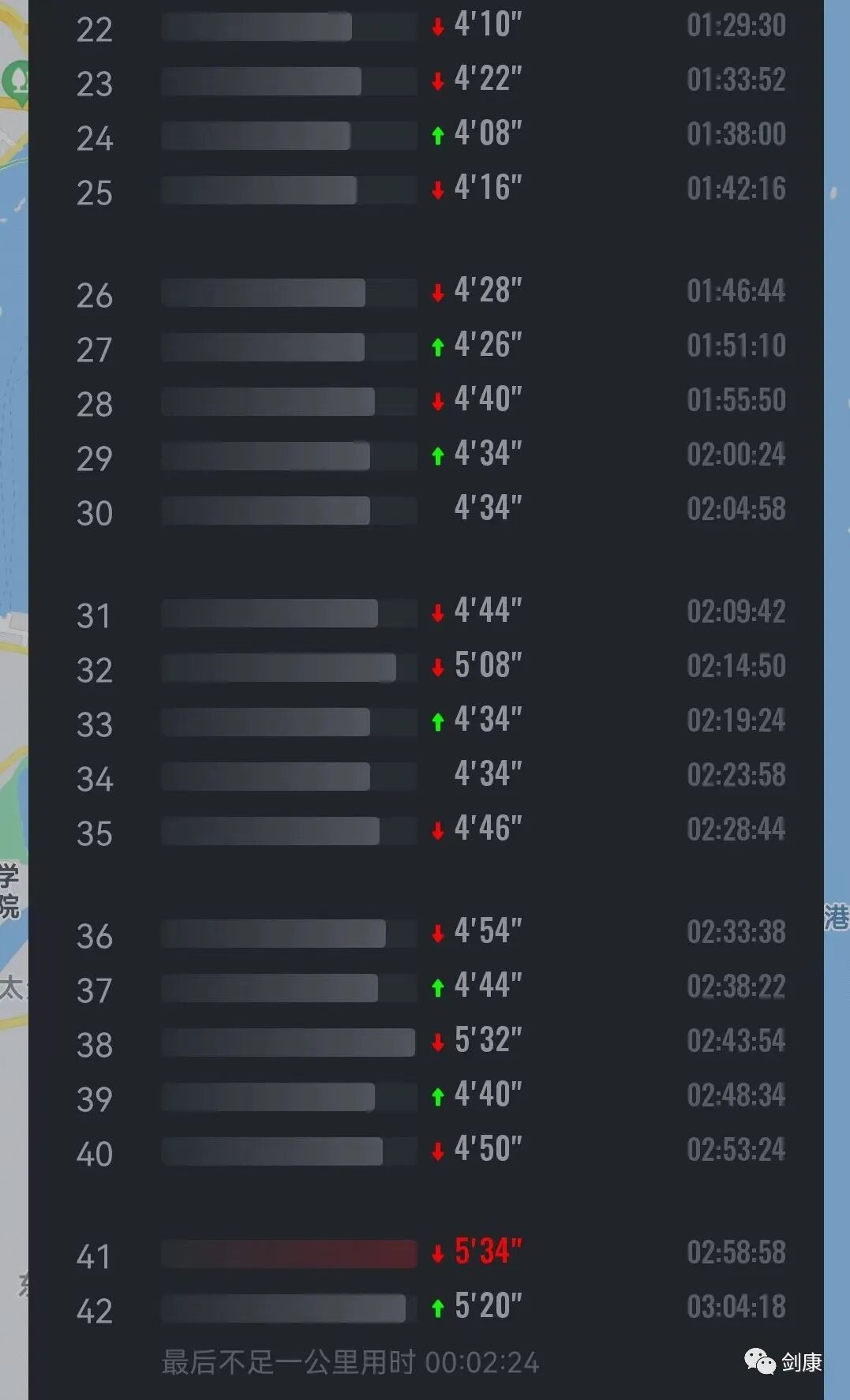
Xiamen second half fell apart completely. To put it bluntly, it was poor goal-setting and poor strategy. As a result, the sub-3 trophy that should have been mine was lost.
Right Timing, Right Place, Right Conditions—All Three Are Essential
After breaking 3, I kept reflecting on how to set reasonable goals and how to achieve them. After repeated thought, I believe that for ordinary recreational runners like us, right timing, right place, and right conditions—none of the three can be missing.
Take my case.
Xiamen: at that time my training was the most systematic, and I had run 2:54 at the Nanhu sub-3 test race, so I had the "people" factor. But I lacked both timing and place. The temperature was over 20°C, the course had big ups and downs. More importantly, I started from Zone C, where the fastest pacer was only 3:15.
Shenzhen: needless to say, I had none of the three. After COVID in December last year, I hadn't trained systematically; monthly mileage barely over 100 km; the weather was hot; the course was unfriendly. Break 3? How could that be possible unless a miracle happened?
Chongqing: it should have been a great opportunity. Unfortunately, I started from Zone B, and breaking out of the pack was too hard. Plus, three weeks before the race, I hurt my ankle, and by 30 km it hurt badly. Although the course was flat and the temperature was right (around 10°C), I could only manage 3:02 in the end, a regretful loss.
Next time you run a marathon, before setting your goal, ask yourself: Is the timing right? Is the place right? Are the conditions right? If you have all three, then all that's left is to go all out. If you have two, it's worth a try. If you only have one, it's risky. If you have none, abandon the goal decisively.
Next Goal: National Class 2 Athlete
I know my own limits; I can't compare with professional athletes. I don't run to win awards, but for a healthy body, self-breakthrough, and like-minded friends. Also, to refine my mind, temper my soul, and develop more disciplined living habits. Alongside stillness (reading, calligraphy), I found a dynamic hobby. Choose the right thing, not just what you like, then stick with it and learn to love it. Of course, I also know that sub-3 is not my limit; I want to go further. This Chinese New Year, I set several annual goals for myself, including the marathon goal of becoming a National Class 2 Athlete, which means a marathon under 2:53.
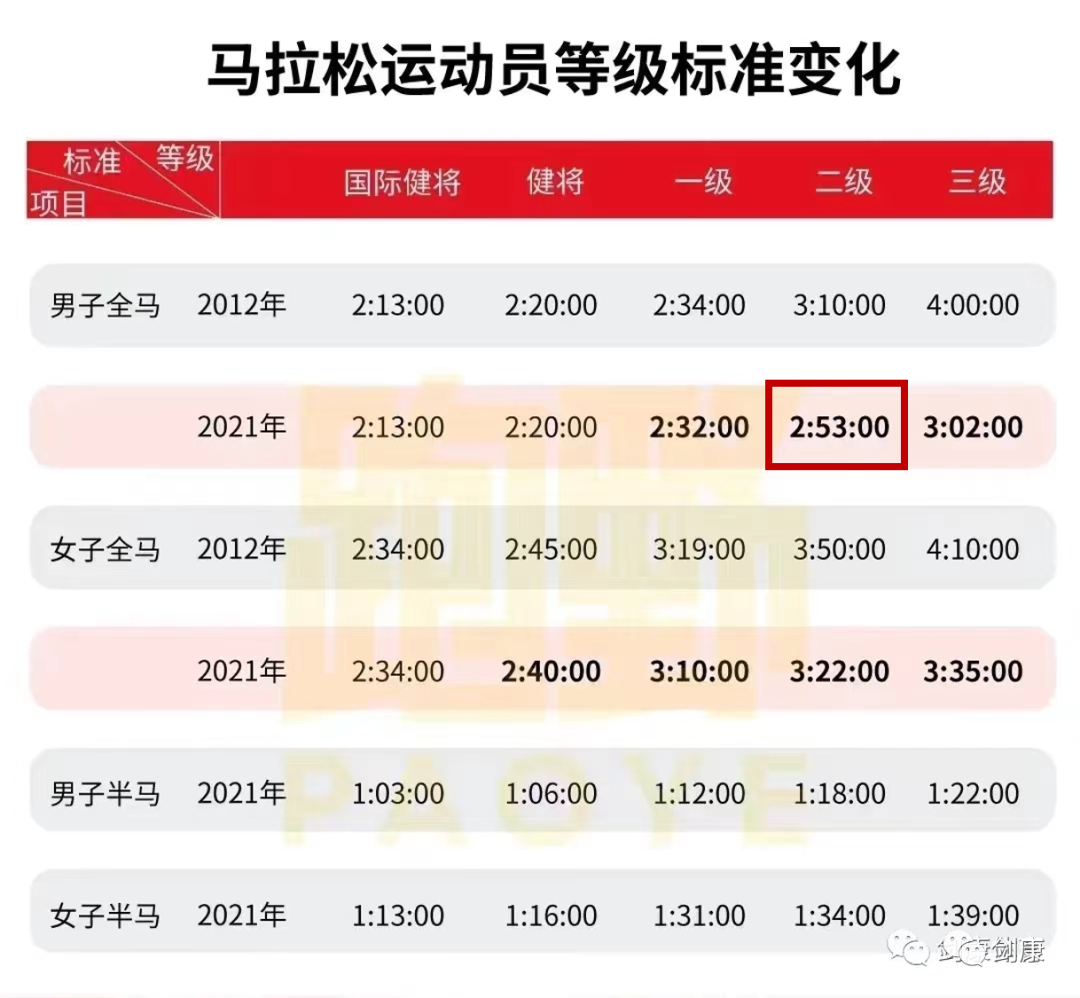
This year's goal is National Class 2. I'll save it for the second half of the year, October–November, after summer training.

Believe in the power of belief. I believe I can do it, and I believe you can too. Life is a marathon. May you keep breaking through and meet a better version of yourself.