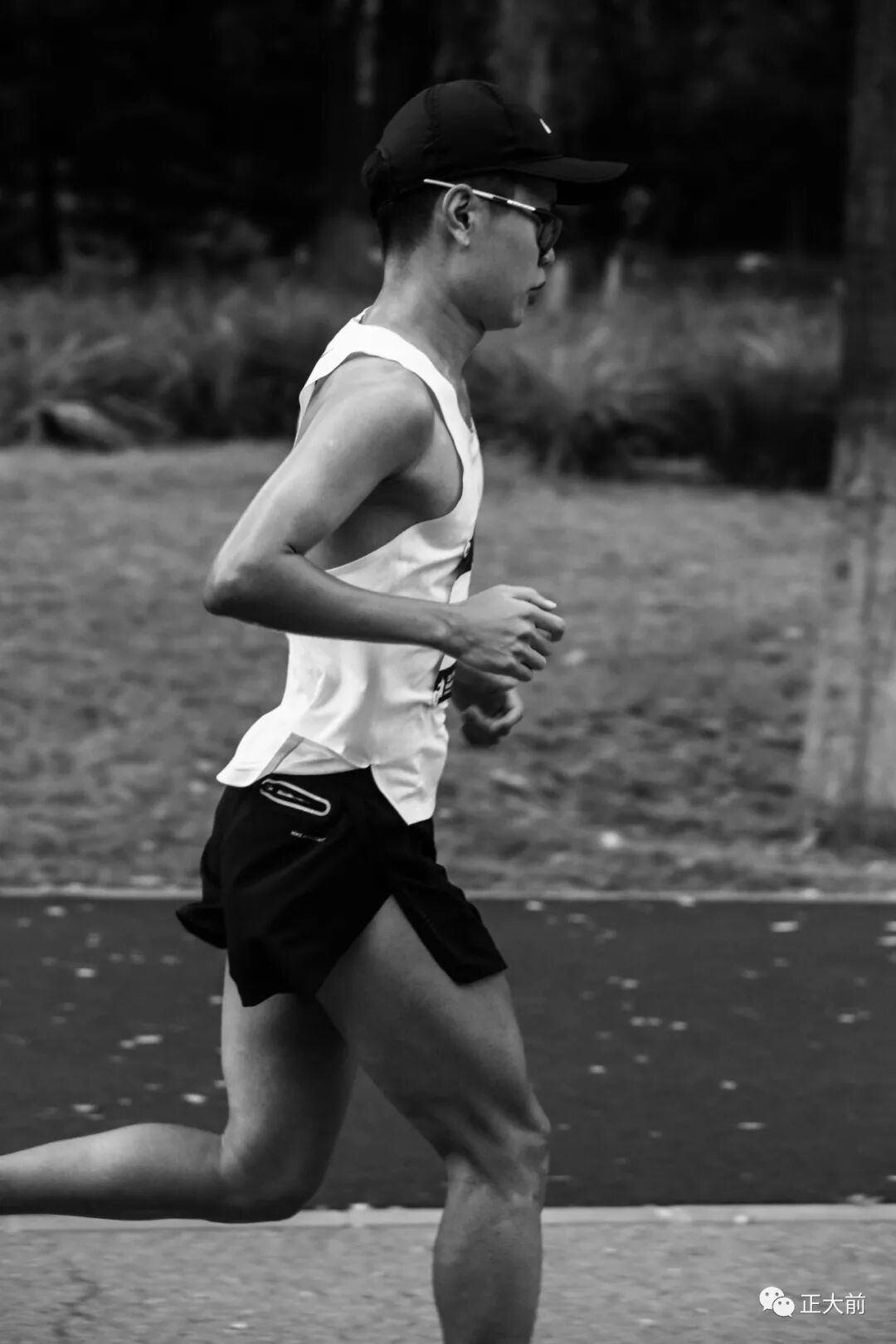
Persistence in what you love will make you shine in ordinary life! If the destination you seek is endless light, don't let the journey grow dim. Shine as brightly as you can—even if only faintly; if you cannot be the moon, be a firefly. In an age of fragmentation, they became shining examples in ordinary life by persisting in what they loved! --- Life Weekly
Dedicating these words to "Lao Siji" (the veteran runner) and those like him! Congratulations once again to him for achieving his goal and setting a huge PB. The following words come from his reflections on running.

Solemn Declaration
The views expressed in this article are purely personal, unprofessional, and not to be taken as expert advice. For reference only.
Introduction
With the conclusion of the Xuzhou Marathon on April 11, 2021, my marathon PB reached 2:40:08. People who don't know me say it's good genes or talent; those who know me say it's extreme self-discipline.
But I think my talent is average and my discipline is slightly above average. What has mattered most for my improvement is learning, thinking, and practicing from better people at every stage (@Momo, @Uncle Hai, @Haitong).
Running is like this, and so is life.
If you:
- Have run many times but never feel joy, or even felt nothing after finishing a marathon—then please find a sport you enjoy.
- Aren't very interested in running and don't want to put in too much effort—then run casually, enjoy the process, and don't have too many expectations for your performance.
Unlike other articles, this one:
- Does not dwell on past hardships or how difficult things were
- Does not discuss injury prevention or recovery, as I am neither professional nor skilled in that area
- Simply aims to act as a note-taker, sharing the lessons, thoughts, and ideas I have picked up for your reference
Foreword: Also the Most Important Experience
Don't Run the Same Pace and Distance Every Day
Some people run the same volume at the same pace every day. Not only is this boring, but it also yields minimal improvement. If the goal is simply general fitness, this is perfectly fine. But if you want to improve your performance, this approach is not recommended.
Although junk miles still count toward your mileage, as someone without much money or free time, I personally prefer more efficient ways to train. I understand running training like a spring: stimulus -> recovery -> stimulus -> recovery. Repeating this cycle is highly effective.
Go Slow When You Should, Go Fast When You Should
An easy run is an easy run. The purpose of an easy run is to let your body recover. You absolutely must not run too fast, even if you feel great at the time. Don't speed up, and definitely don't try to race people who pass you.
Intensity training requires full focus; ensure that every intensity session is of high quality. Also, never skip the warm-up and cool-down for intensity training—this is extremely important.
Long runs are about maintaining sustained output. Try not to stop in the middle. Even if you stop to drink water, don't take too long.
Before every run, think about the purpose of today's run (key point—@Haitong's famous words). Ensure the quality of every training session. Is today's purpose recovery, speed, or endurance? Run with a goal in mind and don't easily change your original intention.
The Plan is Fixed, But People Are Flexible (@Haitong's Famous Words)
Everyone experiences days when they don't feel well. Just do your best. If you're feeling off, you can go slightly slower, reduce the number of sets, or shorten the distance.
Missing the target of one single workout doesn't matter. Looking at the entire training cycle, whether one specific workout was perfect becomes less important.
So don't be discouraged. Running isn't like work. Running is simple—as long as you persist and work hard, you will eventually see results.
Don't Confuse Cause and Effect
Articles about forefoot vs. heel striking, arm swing, various running forms, or how wearing XX shoes improves your time by XX seconds constantly attract clicks and traffic on social media. Uninformed readers are badly misled.
For example, heel recovery. Some people see that elite runners have compact heel recovery and assume that this is what makes them fast. But have you ever thought about the chicken and the egg?
The cause is running fast; the effect is that the leg folds naturally. Trying to force that motion while running slowly wastes a lot of energy. In the Olympic Forest Park, I see many people running at moderate speeds while yanking their heels high behind them. It's really wasteful and highly inefficient.
For friends new to running, I always tell them not to worry about developing a beautiful running form first. Instead, listen to your body's feedback and find a posture that feels comfortable while running.
Please think about many things yourself; don't blindly follow. What is the difference between humans and monkeys? Besides using tools, it's the ability to think more deeply.
Breaking Through Bottlenecks at Different Stages
Breaking 3:30 — Stack Up the Mileage
Generally speaking, for men to run sub-3:30 / women to run sub-4:00, you don't need fancy training plans. Just build up your running volume first.
Reach 200km+ per month, sustained for 2+ months. No need to practice any speed work. As long as you follow the stimulus -> recovery cycle, you should be fine.
For example, the one-month pre-race plan I recently arranged for my mother was 8km/15km/8km/15km/8km/21–30km. My mother is 58 years old with only square-dancing as a fitness base. She trained seriously for one month before the race and finished in 4:00.
I had no connection to any sport since childhood. I reached 3:17 purely by stacking mileage. My mileage for the three months before that race was roughly 200/200/300km.
Breaking 3:00 — Add Tempo Runs
After breaking sub-3:30 and reaching 3:17, I hit a bottleneck. I added tempo run training, usually at marathon pace or slightly faster than marathon pace, typically 10–16km, once a week.
At that time, I basically ran tempo runs of 10–12km. My time improved to 2:59. My mileage for the two months before that race was roughly 300/320km.
Add Intervals
I think most people have sufficient speed for running. Some people are very strong even without adding intervals. But I am someone with very poor speed, so I added interval training during the cycle around my sub-3 breakthrough.
Intervals evolved from short intervals with many sets in the early phase to long intervals with fewer sets close to the race. The goals of different cycles are also different: the early phase mainly improves speed, while the later phase balances speed and endurance.
The most important thing about interval training is: do not run too fast! Do not run at a pace you cannot control! This is not a 100-meter sprint! (Forgive me for using exclamation marks—I have seen this too many times.)
Run at a speed where your form doesn't break down, where you don't slow down within each set, where the rest between sets isn't too long, and where it feels hard but tolerable. You must find your body's sense of rhythm during intervals.
Add Activation Drills
After your regular warm-up before every hard session, you absolutely must do some activation drills. This is really, really important. Even if you feel terrible that day, after doing these drills, you'll feel incredibly strong (@Haitong's famous words).
In my most recent two-month training cycle, I added about 5 minutes of activation drills each time, including side steps with shoulder rolls, jumping jacks, three-step knee hugs / quick high knees, skipping / straight-leg kicks, cross-steps, strides, etc.
Previously, after warming up, I would start the intensity session directly. The first set of intervals or the first 2km of a tempo run always failed to hit the target pace, felt exhausting, and physically uncomfortable. But after adding these drills, these problems disappeared completely.
Add Strength Training
Having had nothing to do with sports since childhood, my core and leg strength were both very poor. In the past, after 30km, my waist would give out, and I would continue running with my hands on my hips. My friends jokingly called this the "hands-on-hips running form."
In the last two months, I did strength training 6 times a week, 15–20 minutes each time, mainly training my core and leg strength. In this marathon, I didn't put my hands on my hips once. My waist felt no soreness, fatigue, or inability to support me.
Add Jump Rope
Jump rope is excellent for calf strength and the soles of the feet. In an interview, trail running master Xiang Fuzhao said she maintained jump rope training during the pandemic.
My calf strength has always been a weakness, and I have had chronic injuries. So in the last two months, I also maintained jump rope training 4 times a week, 15–20 minutes each time.
Previously, whenever my monthly mileage exceeded 400km, I would usually end up limping. This time, I was on the edge of limping but didn't fully break down. I believe jump rope deserves some credit.
Cross-Training
For running, using the same training time to run is the most effective (compared to swimming, cycling, jump rope, and other forms of exercise).
But when you encounter injury periods or plateaus, you need to think about changing your strategy. In an interview, Deng Guomin said that no matter how hard he tried, he couldn't break 2:30 in the past. But after running trail races, he easily broke 2:30.
The human body is truly magical. Many things are difficult to explain scientifically, and every individual case is different. So don't be discouraged. Switch to a different form of cross-training, and you might break through your bottleneck more effectively.
When encountering injuries, the more suitable approach is to reduce volume or change your training method. But I am quite stubborn. Even when injured, I persist in training. Sometimes the injury gradually recovers; other times, I end up limping from training.
But no matter which path you take, as long as you keep training, you will become stronger.
About Training Plans
Key Point: No training plan or method is universally applicable to everyone. The most important thing is finding what works for you.
Here are the training plans I have followed:
Learn to Love Running in 13 Weeks
Found this on Douban.
Not long after I started running, I encountered injuries. After running 500 meters, my shin would ache unbearably until around 7km, when it gradually subsided. Every run was torture.
Going back to square one, I started following the plan in this book—from running 1 minute and walking 2 minutes, to running 2 minutes and walking 1 minute, until finally being able to complete 10km. It was truly perfect for me, with zero athletic background.
I followed the plan for about 10 weeks. After that, my shin still hurt, but the intensity and duration decreased significantly. At least I could continue running without it being so difficult.
For friends who are overweight or have no athletic background, I strongly recommend reading this book.
Advanced Marathoning
Recommended to me by @Uncle Hai. I'll refer to this book as "A-Mei" below.
As my mileage stacked up to a PB of 3:17, my performance hit a plateau. A-Mei is a true training plan in every sense. It covers weekly mileage from 53km to 137km+. At the time, I was following the 88km-per-week group.
It was my first exposure to a structured plan, and injuries were inevitable. After two months of training, I successfully ended up limping. There were two reasons: first, my weak base couldn't suddenly handle such high mileage; second, I am stubborn and don't adjust when injured.
I never ran A-Mei again. The reason wasn't because I got injured, but mainly because the plan included high mid-week mileage, and the weekly structure changed. At the time, I didn't have sufficient time or energy.
Hansons Marathon Method
Recommended to me by @Uncle Hai. I'll refer to this book as "Hanson" below.
I followed this plan for about a year. The weekly structure was also relatively simple—basically 6 runs per week, 3 of which were intensity sessions (intervals/tempo/long run).
Notably, this plan increases the distance of the easy run on the fifth day of the week. The weekend long run usually does not exceed 26km. According to the author, the reason is that the previous day's run is longer, and the second day simulates the latter half of a marathon.
I won't go into further details, but I strongly recommend reading this book.
A Hanson Variation
Named by @Tongshen, learned from the Beijing Nike Dark Horse program.
This is the plan I have been following long-term. It has been very effective and suits me well. It feels very similar to Hanson, with slightly different details. It is also 6 runs per week / 3 intensity sessions (easy -> intervals -> easy -> tempo -> easy -> long run), a spring-like cycle of stress, squeeze, and recovery. A brief summary:
Easy run: Easy jogging, mainly for recovery between intensity sessions and maintaining condition.
Intervals: From early-phase 400m x 12 for speed improvement, to pre-race 5000m x 2 for speed and endurance, mainly improving speed capacity.
Tempo: From early-phase 8km to later-phase 16km, running at target marathon pace. Gradually finding and adapting to the target marathon pace, and improving stamina.
Long run: From early-phase 20km to later-phase 32km, usually 40–60 seconds slower than marathon pace. Mainly improving long-distance endurance.
Good or Bad Plans
I have asked others for training plans, and others have asked me for plans. Plans are neither good nor bad. What matters is understanding the logic behind the plan, finding a training method that suits you, and then persisting with it.
About Race Day
- Clarify your goal.
Anyone can sprint the first 100 meters, but a marathon is not about the first 100 meters—it is about 42.195 kilometers. You can adjust your goal during the training cycle based on your fitness level, but before the race, you must have a clear target.
For example, if your goal is to break 3:00 with a fallback of 3:05, your pace range should be 4:15–4:23/km. If you get too excited and run faster than 4:10/km without adjusting quickly, you will likely crash. Of course, if your attitude is "if I blow up, so be it, but I'm going all in for sub-3," that's also a valid approach.
Finally, thank you to all the friends who have helped me grow along the way. Too many to list individually—you are all in my heart. Sending love.
Three meals, four seasons, five grains, seven emotions and six desires. Ordinary people say life is an adventure. For me, and perhaps for most people, it is not an adventure, but an irresistible torrent. This torrent sweeps us forward, leaving us with no control and no power to resist. We all choose different ways to fight against this torrent. I am fortunate to have chosen the same "run with all your might" as Lao Siji. Undoubtedly, he is the one who does it best. Thank you for his sharing, and congratulations once again on achieving this milestone!